Dishwasher Benefits


We use it every day, but do we really know what happens behind our dishwasher door? We discover how much water a dishwasher uses and how you can save this precious resource with some easy tips.

An efficient kitchen relies on understanding your appliances. A dishwasher uses less water compared to washing them by hand. By understanding the variables that influence water usage, you can optimize your appliance's performance, lower your utility bills, and maintain pristine results.
Appliance technology has evolved rapidly. Older dishwashers are notoriously heavy water users, whereas modern, ENERGY STAR® certified models are engineered for precision. Most contemporary units use fewer than 4 gallons per cycle, utilizing advanced turbidity sensors that measure soil levels in real time to dynamically adjust water volume and cycle duration.
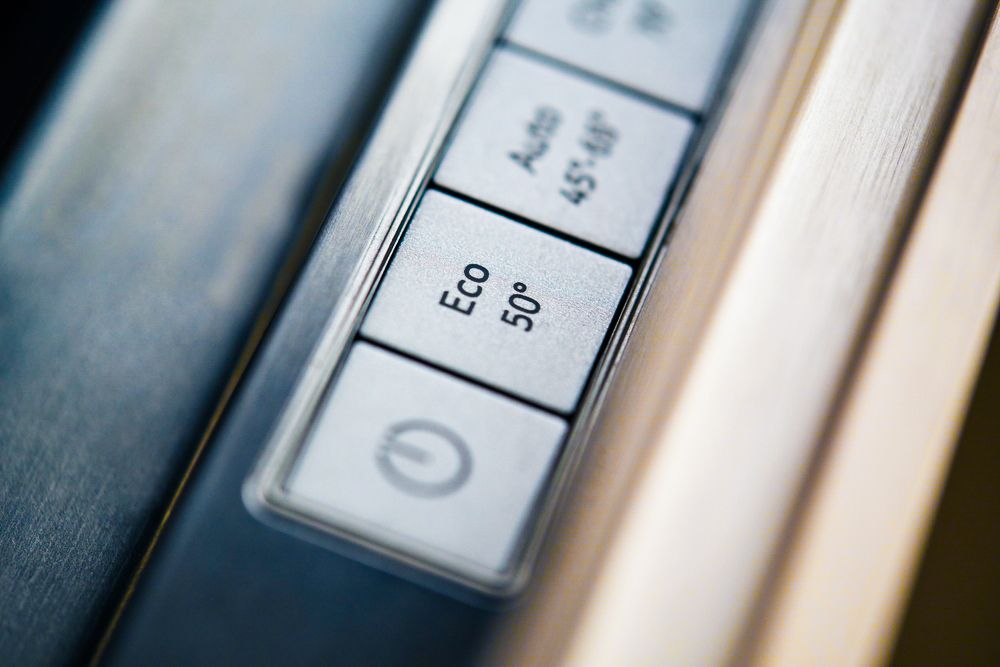
The program you select directly dictates the volume of water deployed. Choosing the right cycle for the job is the easiest way to prevent waste:
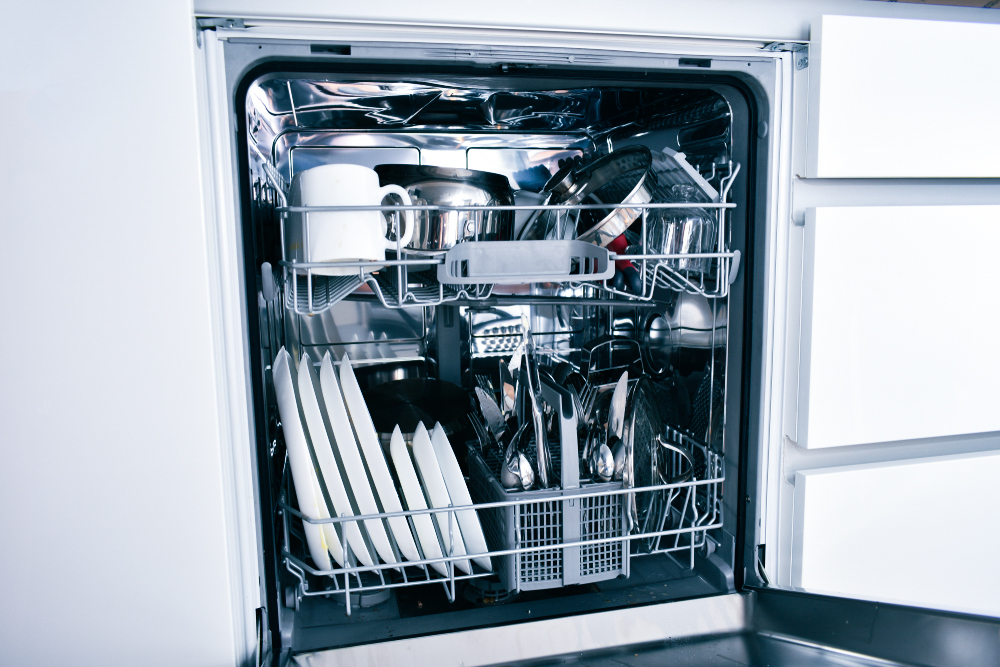
How you load your dishwasher directly impacts its efficiency. Dishwashers are designed to fill a set volume of water regardless of the load size; running a half-empty machine essentially doubles your water usage per dish.
Conversely, overloading creates a different kind of waste. Crowded dishes block the spray arms, preventing proper water distribution and forcing secondary re-washes. For peak efficiency, distribute items evenly across the racks to help ensure unobstructed water flow.
External utilities play a quiet role in consumption. High baseline water pressure can cause the machine to draw more water than intended. Similarly, temperature matters: if your incoming water exceeds 140°F (60°C), the dishwasher may trigger additional rinse cycles strictly to cool the internal tub down, unintentionally increasing overall water use.
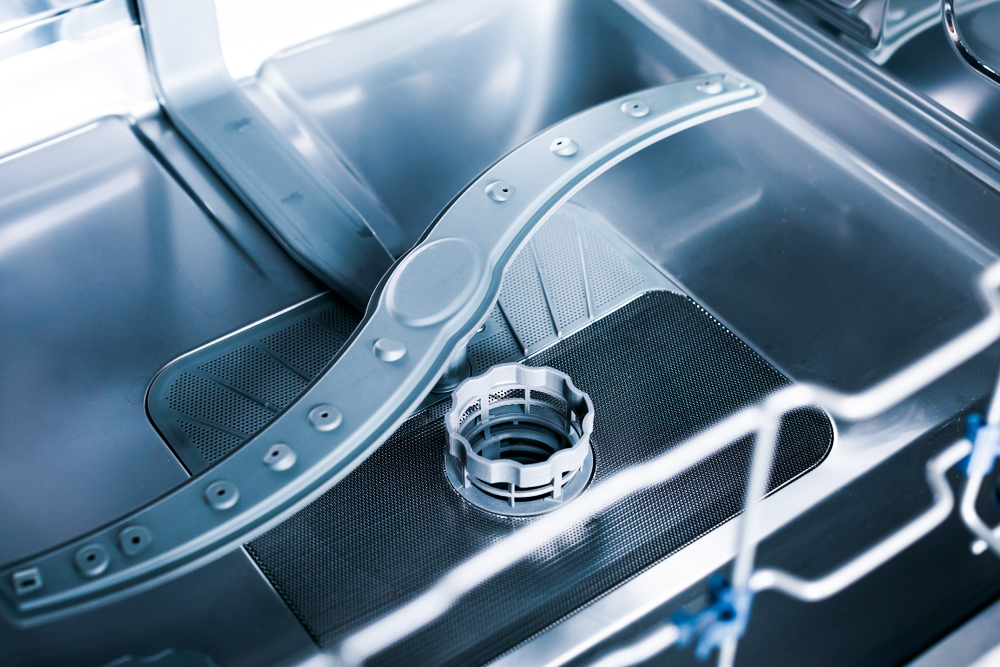
A dishwasher can only perform as well as its components to allow. Over time, filters and spray arm nozzles can become clogged with food debris and mineral buildup. When water flow is restricted, the machine is forced to extend its cycle or draw extra water to compensate. Regularly cleaning these components can restore optimal hydraulics, preserving both water and energy.
Even the most highly engineered, water-saving dishwasher requires smart operation to reach its full potential. Minor adjustments to your daily routine can significantly enhance cleaning performance while driving down utility costs.
Dishwashers use virtually the same amount of water and energy regardless of how many items are inside. Running half-empty cycles inherently wastes resources. Wait until the machine is fully loaded before initiating a cycle, ensuring you leave enough spatial clearance between items for optimal water distribution.
The heated dry cycle is one of the most energy-intensive functions of a dishwasher. Instead, opt for the Air-Dry setting, or crack the door open slightly once the final rinse finishes. Letting the dishes dry naturally cuts a massive portion of the appliance's total electricity consumption.
If your current dishwasher has been in service for more than a decade, it may be time to consider an upgrade. Contemporary ENERGY STAR® models operate on strict efficiency standards that significantly outperform the engineering of the past, paying for themselves over time via reduced utility bills.
As one of the largest appliances in your home, you wouldn’t be judged for assuming your dishwasher uses a considerable amount of water with each cycle. So, do dishwashers save water or do dishwashers use a lot of water? Well, it depends on the make and model of your machine.
Of course, a modern, energy-efficient dishwasher is going to be far more efficient than an older model. In fact, dishwashers dating from before 1994 can use approximately 37—56 litres of water per load1When it comes to saving water with each dishwasher cycle, every little action you take counts. Not only will the tips help below to reduce your water bill, but they will also ensure your dishwasher lives on for longer, and keep your dishes as clean as a whistle!
1 https://www.directenergy.com/learning-center/energy-efficiency/how-much-energy-dishwasher-use
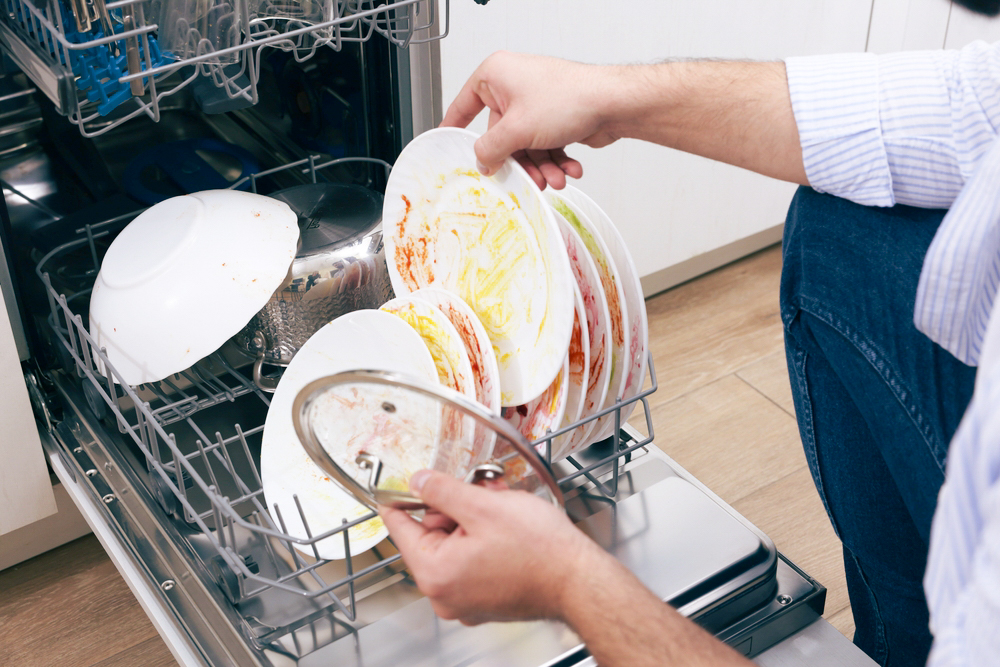
Skipping the pre-rinse is one of the most effective ways to save up to 75 liters of water per load.